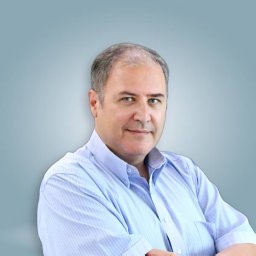
Stavros G. Stavrinides
Professor, Physics Department, Democritus University of Thrace
Academician, Class IV Natural Sciences, European Academy of Sciences and Arts
From Nonlinear Dynamics and Electronics to Interdisciplinary Applications
Stavros G. Stavrinides
From Nonlinear Dynamics and Electronics to Interdisciplinary Applications
Short bio

Prof. Stavros G. Stavrinides is a Physicist with a MSc in Electronics and a PhD in Chaotic Electronics, all awarded by Aristotle University of Thessaloniki, Greece. He currently serves as a Full-Professor of Nonlinear Dynamics and Electronics at Physics Department, Democritus University of Thrace, in Greece. Additionally, he directs the Solid-State Physics, Electronics, Nanotechnology and Complex Systems Research Lab. In 2026, he was nominated and elected Ordinary Member, Class IV of Natural Sciences, at the European Academy of Sciences and Arts.
His research interests include, non-exhaustively, interdisciplinary applications of nonlinear dynamics and chaos (from social and economic systems to medicine and pharmaceutics), chaotic electronic circuits, unconventional (chaos-based) hardware security and Physical Unclonable Functions (PUF) focusing on the IoT, memristors and memristor-based circuits, nonlinear time series analysis and forecasting. Research regarding unconventional machine learning approaches and edge computing (like reservoir computing) as well as their applications, are also in his active research domains.
Prof. Stavrinides has taught numerous topics in physics and electronics in academia for more than 18 years. Prior positions include (among others) being Full-Professor at International Hellenic University in Greece, visiting Assistant Professor at the University of Cyprus and Adjunct Lecturer at Aristotle University of Thessaloniki in Greece.
He co-chairs the series of the International Interdisciplinary Symposia on Chaos and Complex Systems (https://chaos-symposium.org). He also serves as Associate Editor of the Journal of the Franklin Institute.
Prof. Stavrinides has authored or co-authored more than 140 peer-reviewed journal and conference papers, 4 book chapters, 1 textbook and edited 4 books, while he guest-edited 7 special issues. He has participated, as a researcher, in several national and international (EU, NATO) funded projects.
Prof. Stavrinides also has a social activity related to his scientific interests and expertise. To this direction he leads, together with Prof. I. Antoniou, an educational action fostering quantum readiness in Greece, by organizing the last 5 years an annual (free to attend) lecture series on Quantum Computing for senior high school and university students (see https://kyma.edu.gr). In addition, he has been appointed (by the Greek Ministry of Education) President of the Scientific Supervising Councils of the Experimental School of University of Thessaloniki, as well as the Model High Schools of the city of Larisa.
Finally, he is an IEEE senior member, member of the Chua Memristor Center and the Micro-Nano Scientific Society.
Member of



'
Solid State Physics, Electronics, Nanotechnology and Complex Systems Research Lab | @Duth

.
Institute for Complexity | @Duth


Collaborations


Member of

'
Solid State Physics, Electronics, Nanotechnology and Complex Systems Research Lab | @Duth
'
Institute for Complexity | @Duth
Collaborations
JOURNAL
CONFERENCE PAPERS
BOOK CHAPTERS
PROJECTS
AND
GRANTS
BOOKS
JOURNAL SPECIAL SESSIONS
Research Fields
Publicity


Professional-Academic Career
Prof. Stavrinides has worked at various universities in Greece and Cyprus. Prior and in parallel to his academic career he works as physics instructor in secondary education where he also served as High School Principal.

2012-2013
Visting Ass. Professor, ECE Department

2010-2011
Adjunct Lecturer, Physics Department
2008-2010
Adjunct Lecturer, Department of Informatics

1997-2017
Physics Instructor, High School Principal

2026-present
Ordinary Member, Class IV

2024-present
Full Professor, Physics Department

2022-2024
Full Professor, Physics Department
2017-2022
Faculty Member, School of Science and Technology

2015-2017
Adjunct Lecturer, Informatics & Telecom Dept.
Latest Publications

Stochastic resonance (SR) effect observed in biological, physical, and engineering systems is commonly described quantitatively by power spectral measures that require complex mathematical operations and long, continuous observation. Here, we propose two measures based on the switch-phase distribution to qualitatively describe the SR effect, namely, the power norm and the probability that the switch phase lies within a specific range around the peak of the switch-phase distribution. They are easy to be practically determined from a single long run or from multiple short runs. Further, theses metrics were used to quantitatively describe the SR effect observed experimentally in Chua’s circuit, operating in chaotic single-scroll regime, forced by 1 kHz sinusoidal subthreshold internal electric or external magnetic signal with switches between attractors induced by internal electric Gaussian noise. The dependence of the switch-phase distributions on the noise intensity for two types of oriented switches are presented. The proposed measures give the optimal noise level as obtained with the widely used signalto-noise ratio (SNR) measure. The dependence of the first measure on the noise intensity is the same as the SNR dependence. The second measure decreases with increasing noise intensity and has an inflection point at the optimal noise intensity, being almost linear in the vicinity of this point. This dependence on the noise intensity hints for many potential applications, e.g., to aperiodic signal coding and decoding. Both measures are particularly useful for adaptive stochastic resonance and parallel processing.
The increasing integration of Artificial Intelligence (AI) in education (AIEd) and its dependence on contemporary communication infrastructures (5G/6G, the Internet of Things (IoT), and Multi-Access Edge Computing (MEC)) has prompted a surge of research into applications, infrastructural dependencies, and deployment constraints. This is giving rise to a new paradigm termed AI-Enabled Telecommunication-Based Education (AITE). This review synthesises the recent literature (2022–2025) to examine how telecommunications and AI technologies converge to enhance educational ecosystems through adaptive learning systems, intelligent tutoring systems, AI-driven assessment, and administration.The findings reveal that low-latency, high-bandwidth connectivity, combined with edgedeployed analytics, enables real-time personalisation, continuous feedback, and scalable learning models that extend beyond traditional classrooms. In addition, persistent critical challenges are also reported, including issues with ethical governance, data privacy, algorithmic fairness, and uneven access to digital infrastructure, all affecting equitable adoption. By linking pedagogical transformation with telecom performance metrics—namely, latency, Quality of Service (QoS), and device interconnectivity—this work outlines a unified crosslayer framework for AITE. This review concludes by identifying future research avenues in ethical AI deployment, resilient architectures, and inclusive policy design to ensure transparent, secure, and human-centred educational transformation.


Ensuring the confidentiality, integrity and authenticity of transmitted data for single- and multi-agent systems is becoming crucial to protect these systems against potential threats. This is precisely the focus of this work that introduces a novel approach for securing communications between unmanned aerial vehicles (UAVs). In particular, to safeguard the data against attacks in UAV networks, implemented for military-grade or critical infrastructure operation scenarios, different security techniques are combined, including the employment of a chaotic synchronization-based communications architecture. The proposed chaotic-synchronized, secure communications system (UAV-CSCS) is applied onboard a UAV and comprised of three layers, namely a VPN server (initial security layer), a custom ROS-based framework (data collection and distribution layer), and a lightweight chaotic communications module (secondary security layer). UAV-CSCS’s main component is a transmitter-receiver communication architecture based on chaotic synchronization that successfully encodes and decodes information over a chaotic signal, enabling secure information exchange between agents. To validate the effectiveness of the proposed system, a prototype is designed, developed, and thoroughly tested in real-world multi-UAV experiments. The results demonstrate secure, real-time communication with low-power consumption and minimal resource allocation (in terms of CPU and RAM), validating the system’s efficiency and applicability.